You will use cloud-based platforms to collaborate in real time, centralize assets, track versions, and accelerate iterative design with secure, scalable workflows that align distributed teams and streamline production.
The Evolution of Cloud-Native Design Environments
Cloud-native design environments let you access projects, collaborate in real time, and scale rendering without local hardware limits, so you can iterate faster and maintain consistent assets across teams.
Transitioning from Local Hardware to Virtual Workstations
Shifting from local machines to virtual workstations gives you instant access to GPU power, consistent environments, and simpler asset management across projects.
Facilitating Global Talent Integration and Remote Workflows
Connecting global talent through cloud tools lets you assemble diverse teams, reduce latency for shared files, and run collaborative reviews regardless of time zones.
You will reduce onboarding friction by granting secure role-based access to projects, cloud-hosted design systems, and shared component libraries, so you can align on standards instantly. Real-time co-editing tools and low-latency streaming let you review high-fidelity prototypes without file transfers, while centralized versioning and granular permissions protect IP and simplify audits across distributed teams.
Real-Time Synchronous Collaboration
Real-time collaboration moves design work into a shared space where you edit, comment, and iterate together, cutting meeting overhead and speeding decision cycles.
Multi-User Live Editing and Instant Feedback Loops
When multiple users edit simultaneously, you see changes instantly, give contextual feedback, and resolve choices on the spot, reducing handoffs and accelerating prototypes.
Eliminating Version Conflicts via Centralized Repositories
Centralized repositories ensure you always work on the latest file, track history, and merge contributions without sending dozens of copies back and forth.
By storing authoritative assets in the cloud and enforcing a single-source workflow, you can audit changes, roll back mistakes, assign clear ownership for components, and integrate automated checks so designs remain consistent as teams scale.
High-Performance Computing and Resource Scalability
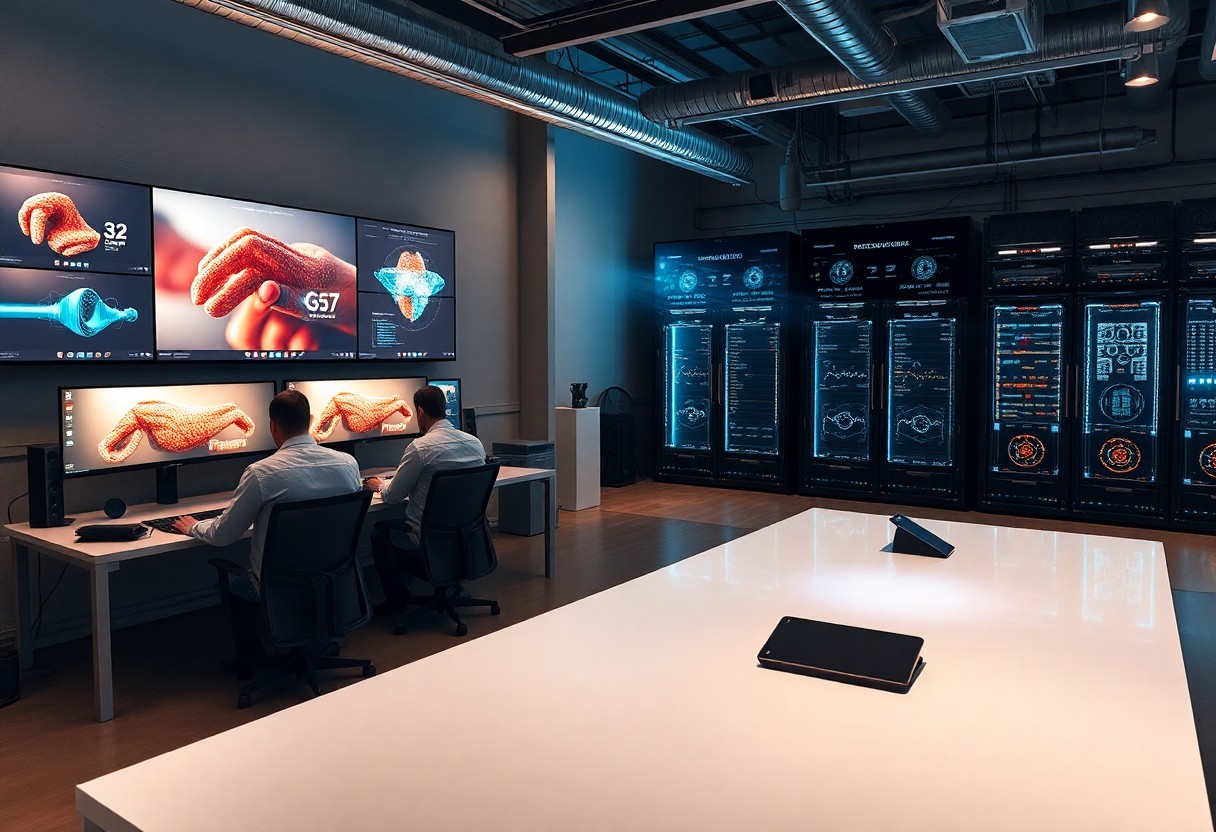
Cloud-based HPC gives you elastic compute for rendering, simulations and AI-assisted design, shortening timelines and removing local hardware constraints so teams iterate faster and handle larger projects.
Leveraging Remote Rendering for Complex 3D and Video Projects
You can offload GPU-heavy frames to remote render farms, preview complex scenes instantly, and collaborate on edits without waiting for local exports or tying up workstations.
On-Demand Processing Power for Data-Intensive Design Tasks
Scalable bursts of CPU and GPU time let you run large simulations, train models, or batch-process assets on demand while controlling costs with time-limited instances and usage policies.
When you schedule jobs, autoscaling groups and containerized pipelines ensure resources match peak demand, while spot or preemptible instances cut costs for noncritical batches; you should design retry logic, priority queues and caching to minimize wasted compute and data transfer. Use orchestration tools and managed batch services to enforce quotas, monitor costs, and maintain secure access to datasets across hybrid environments.
Centralized Asset Management and Ecosystem Connectivity
Cloud-based hubs let you access, tag, and version assets from one searchable index, keeping teams aligned and reducing duplication across tools.
Unified Brand Libraries and Cross-Platform Synchronization
Shared libraries allow you to publish approved logos, color palettes, and templates centrally, syncing updates across apps so every project reflects consistent branding without manual chasing.
Streamlining Interoperability Between Specialized Design Software
APIs and open formats help you move assets between vector, 3D, and motion tools, reducing import errors and keeping metadata intact for faster handoffs.
Integrations combine cloud-native plugins, standardized formats (SVG, PDF, USDZ, Alembic) and metadata schemas so you can automate conversions, preserve layers and annotations, and trigger CI-like checks before handoff; role-based permissions and conflict resolution let teams iterate without overwriting work, while shared pipelines sync render jobs and asset proofs for clearer ownership.
The Impact of Generative AI on Cloud Collaboration
You can use cloud-hosted generative AI to turn sketches and prompts into multiple polished concepts, speeding reviews and aligning teams with context-aware suggestions that adapt to your brand guidelines.
Cloud-Based Machine Learning for Workflow Automation
Automation built on cloud machine learning routes repetitive tasks, triages assets, and triggers versioning so you can focus on design decisions while pipelines handle exports, testing, and distribution.
Enhancing Collective Creativity through AI-Driven Insights
Insights generated in the cloud surface patterns across projects, suggesting novel combinations and user-focused pivots that help your team iterate with direction and confidence.
Cloud analytics aggregate collaborator behavior, color and layout trends, and outcome metrics to recommend role swaps, curated idea pairings, and timeline adjustments so you can assign tasks that accelerate iteration while preserving individual creative voices and strategic coherence.
Summing up
Taking this into account you must adopt cloud-native workflows to collaborate in real time, manage assets securely, and scale projects across teams; prioritize clear standards, version control, and privacy practices so you can maintain creative control and speed as tools evolve.