
With effective SEO strategies, you can dramatically enhance your website’s online presence. This post will guide you through necessary techniques that will help improve your site’s visibility in search engines. By implementing these methods, you not only attract more visitors but also keep them engaged with your content. Understanding how search engines operate is key to standing out in the digital landscape, and this guide is designed to equip you with the knowledge needed to navigate this ever-changing environment.
Understanding SEO
For anyone looking to enhance their online presence, understanding SEO is a fundamental step. SEO, or Search Engine Optimization, is the process of optimizing your website so that it ranks higher in search engine results. This involves using a variety of strategies and techniques to ensure that your site is not only visible but also recognized as valuable by search engines such as Google. By doing so, you increase the chances of attracting organic traffic to your site, which can lead to increased engagement, conversions, and overall success.
What is SEO?
An effective SEO strategy revolves around a deep understanding of how search engines operate. Search engines use complex algorithms to determine which websites should appear at the top of search results based on user queries. These algorithms consider multiple factors, including the relevance and quality of content, site structure, keywords, and backlinks. As you develop your skills in SEO, you will learn that it’s not just about incorporating specific keywords; it’s about making your site user-friendly and engaging.
Importance of SEO for Websites
About 75% of users never scroll past the first page of search results, which highlights the significance of being positioned favorably on these results. SEO is important for your website because it helps you connect with your target audience effectively. When your site ranks higher, you not only gain visibility but also credibility. Users often equate high rankings with trustworthiness, so having a solid SEO strategy can significantly boost your online reputation.
Importance of SEO extends beyond just attracting visitors; it’s about ensuring that those visitors are genuinely interested in what you have to offer. By targeting the right keywords and optimizing your content accordingly, you’re positioning your site to appeal to users looking for specific solutions. With the right approach, SEO can drive quality traffic to your site, resulting in better conversion rates and ultimately contributing to your business goals.
Key SEO Concepts
On your journey to mastering SEO, you will encounter several key concepts that serve as the backbone of effective optimization. These concepts include keyword research, content quality, on-page and off-page SEO tactics, and user experience. Each element plays a critical role in enhancing your site’s visibility and ensuring that search engines recognize your content as valuable and relevant. Understanding these foundational aspects will empower you to create a more robust SEO strategy.
Concepts like keyword research help you identify what your potential audience is searching for, allowing you to tailor your content to their needs. Meanwhile, content quality cannot be overlooked; it’s vital to provide valuable, engaging, and informative content that retains user attention. Furthermore, on-page SEO involves optimizing various elements within your website, such as title tags and meta descriptions, and off-page SEO includes building backlinks from reputable sources. Grasping these concepts will lay a strong foundation for your SEO efforts, setting you on the path to increased online visibility.

Keyword Research
Even though the idea of keyword research may sound daunting, it is one of the most effective ways to enhance your website’s visibility. Understanding the right keywords to target can significantly contribute to your overall SEO strategy. The process begins with identifying the specific phrases and terms that your target audience is using when searching for information related to your website, products, or services. With the right keywords, you can tailor your content to resonate with your audience and improve your chances of appearing in search results.
What Are Keywords?
Before you explore creating content, it’s important to clarify what keywords are. Keywords are the words and phrases that users type into search engines when they’re looking for something. Essentially, keywords are the bridge between your content and the user’s search intent. When users enter these phrases, they expect to find information that answers their questions or fulfills their needs. Therefore, identifying and using the right keywords is fundamental to attracting the right audience to your website.
Furthermore, keywords can be categorized into different types, including a single word (short-tail) or phrases consisting of several words (long-tail). Short-tail keywords are typically broader and have higher search volumes, while long-tail keywords are more specific and targeted. By incorporating both types into your strategy, you can gain comprehensive coverage of your niche.
Tools for Keyword Research
After you understand what keywords are, the next step is to utilize tools that can help you uncover higher-value keywords. There are many resources available, both free and paid, that can significantly aid in your keyword research endeavors. Tools like Google Keyword Planner, SEMrush, and Ahrefs offer insights on keyword search volume, competition level, and related keywords. By leveraging these tools, you can make data-driven decisions about which keywords are worth targeting in your content.
It’s important to choose the right tool for your needs, as different platforms may provide varied insights. For example, some tools focus more on search volume while others may give you a clear picture of keyword difficulty. You want to balance finding keywords with substantial search volume alongside those that are easier to rank for. This way, you can plan your content strategy effectively and improve your site’s visibility online.
Long-Tail vs. Short-Tail Keywords
Against the backdrop of keyword research, it’s important to understand the difference between long-tail and short-tail keywords. Short-tail keywords, as previously mentioned, are usually one or two words long and may yield high search volumes; however, they are often more competitive. Conversely, long-tail keywords tend to be three or more words in length and are typically less competitive. They usually attract a more specific audience, which can lead to higher conversion rates.
Hence, balancing your keyword strategy with both long-tail and short-tail keywords can greatly benefit your SEO efforts. While short-tail keywords can give you wider exposure, long-tail keywords can help you connect with users who are further along in the buying process. This dual approach ultimately positions you to capture a larger share of search traffic.
Analyzing Competitor Keywords
About analyzing your competitors’ keyword usage, it is a vital step in refining your own keyword strategy. By understanding which keywords your competitors rank for, you can identify gaps in your own content and take advantage of potential opportunities. This strategic insight allows you to design content that can outperform your competitors and attract the right audience to your site.
ShortTail keywords often play a major role in competitive analysis. You can use tools like SEMrush or SpyFu to see what keywords are driving traffic to your competitors’ websites. By mimicking the keywords that have proven successful for them, while adding your unique perspective to the content, you can increase your chances of ranking higher in search results and driving more traffic to your site.

On-Page SEO Techniques
Despite the rapidly evolving digital landscape, mastering on-page SEO techniques is imperative for enhancing your website’s visibility. By optimizing various elements on your pages, you can significantly improve your chances of ranking higher in search engine results. Each component plays a vital role in how search engines interpret your content, ultimately affecting your website’s performance.
Crafting Effective Title Tags
Tags are the first thing users notice in search results, making it imperative to craft compelling title tags. A well-structured title tag should include your primary keyword and convey a clear message about the content on the page. Aim for a length of 50-60 characters so your title fits nicely within search engine results, ensuring that it captures the attention of your target audience.
Additionally, incorporating your brand name can help in building credibility. A unique title tag that accurately reflects the content can enhance click-through rates and encourage users to explore further. Avoid duplicating title tags across pages to maintain the distinctiveness of each page.
Meta Descriptions and Their Importance
The meta description serves as a concise summary of your webpage’s content and is displayed below the title tag in search engine results. A well-written meta description should entice users to click on your link, ideally incorporating keywords relevant to your content. Aim for a length of 150-160 characters to ensure the full description is visible to users.
Indeed, a compelling meta description can be the deciding factor in whether or not a user chooses to visit your site. By crafting a description that is both informative and attention-grabbing, you enhance the chances of attracting more organic traffic, which is the goal of effective on-page SEO.
Header Tags and Content Structure
Across your webpage, header tags (H1, H2, H3, etc.) play an imperative role in structuring your content and improving readability. Start with a strong H1 tag that includes your primary keyword, as this establishes the main theme of the page. Following that, you can utilize H2 and H3 tags to break down content into sections, making it easier for both users and search engines to navigate.
Tags help to organize your content logically, providing users with a better experience and enabling search engines to understand the context of your material. A well-structured header hierarchy can result in enhanced indexing and ultimately help your pages rank higher.
Image Optimization
After you have structured your content, don’t overlook the importance of image optimization. Ensuring that your images are properly sized and have descriptive file names and alt text can significantly enhance your SEO efforts. Search engines cannot ‘see’ images in the same way humans do, hence using alt text helps convey the image’s content and improves accessibility.
Considering this, optimizing images can improve load times as well, which is a factor that impacts user experience and rankings. Always choose the right format (JPEG, PNG, etc.) and compress images without sacrificing quality to ensure your website runs smoothly.
URL Structure Best Practices
Across your website, implementing a clean and descriptive URL structure can positively influence your SEO strategy. URLs should be easy to read and include your target keywords, as this aids both search engines and users in understanding the page’s content at a glance. Avoid lengthy, complex URLs that can confuse users and deter them from clicking.
Hence, a well-structured URL not only enhances user experience but also increases the likelihood of higher rankings. Make sure to use hyphens to separate words and keep the URL concise for better optimization.
Off-Page SEO Strategies
Your website’s visibility isn’t solely dependent on the content you create and place on your own platform; it is equally influenced by strategies that take place outside your website. This is where off-page SEO comes into play, focusing on activities that can elevate your site’s authority and relevance. By implementing effective off-page techniques, you can enhance your site’s trustworthiness in the eyes of search engines, potentially improving your rankings and driving more organic traffic.
Building Quality Backlinks
By establishing quality backlinks, you’re not just increasing your site’s authority; you’re also contributing to a better user experience for your audience. Backlinks act as a vote of confidence from one site to another, signaling to search engines that your content is credible and worth referencing. Seek links from reputable and relevant websites to maximize their impact; this will pave the way for an increase in organic traffic and improve your site’s overall performance in search results.
By fostering relationships with industry leaders and participating in reputable directories, you can also gain valuable backlinks. Networking with other content creators and sharing your expertise through interviews can further enhance your backlink profile. Ultimately, every high-quality backlink serves as a building block that reinforces your website’s credibility and boosts your online visibility.
Social Media’s Role in SEO
Against the common misconception, social media does have a significant role in enhancing your SEO efforts. While social media signals may not directly impact search engine rankings, they contribute to increased visibility and facilitate effective content sharing. When your content is shared across various platforms, the likelihood of earning organic backlinks increases, which is beneficial for your site’s authority.
Against the traditional view that SEO and social media operate independently, it’s beneficial to see them as complementary. A strong social media presence can drive more traffic to your site, which can, in turn, enhance user engagement. Higher engagement rates often send positive signals to search engines, helping to improve your rankings.
Indeed, leveraging social media is an excellent way to broaden your digital footprint. By regularly posting engaging content and interacting with your audience, you strengthen your brand’s presence and visibility online. When users recognize and engage with your brand across different platforms, this not only builds trust but can also lead to an increase in referral traffic to your website.
Guest Blogging and Its Benefits
The practice of guest blogging presents an opportunity to expand your reach while simultaneously boosting your SEO efforts. By contributing quality content to other relevant blogs in your niche, you can tap into their audience and, in return, gain backlinks to your website. This reciprocal relationship not only enhances your credibility but also introduces you to potential customers who may not have encountered your brand before.
Additionally, guest blogging allows you to position yourself as an authority in your field. By sharing your knowledge and insights on reputable platforms, you cultivate trust with the audience and encourage them to visit your site for more information. Each guest post can serve as a stepping stone toward increased visibility and enhanced SEO performance.
And the benefits of guest blogging extend beyond just the backlinks. You gain a unique opportunity to connect with new audiences and form relationships with fellow bloggers and influencers. This exposure can lead to further collaboration and networking, amplifying your brand’s reach and solidifying its reputation in the industry.
Online Reputation Management
About they say, a good reputation is hard to build but easy to destroy. Online Reputation Management (ORM) is imperative for maintaining and enhancing your brand’s image across various platforms. By actively managing how your brand is perceived online, you can mitigate negative feedback and promote positive interactions, which ultimately supports your SEO objectives. A strong online reputation can enhance your credibility, improve customer trust, and increase conversion rates.
About the benefits of maintaining a positive online reputation, active engagement with your audience through social media platforms and review sites can significantly affect how your brand is perceived. Responding promptly and professionally to negative reviews while actively soliciting and showcasing positive feedback will set you apart from competitors and is a positive signal to search engines.
Social interactions play a pivotal role in online reputation management. Monitoring social media and review platforms for mentions of your brand allows you to address issues immediately and show that you value customer feedback. By fostering a positive online image, you not only improve your reputation but also create a relationship with your audience that encourages loyalty and repeat visits to your site.
Technical SEO
Keep in mind that technical SEO forms the backbone of your website’s performance and search engine visibility. This subset of SEO ensures that your website is structured correctly and meets the technical requirements set by search engines, resulting in better indexing and improved user experience. In particular, focusing on performance, mobile optimization, and security can significantly boost your site’s potential to attract organic traffic.
Understanding Site Speed and Performance
On the internet, speed is everything. Users expect your website to load in less than three seconds, and if it doesn’t, they are likely to bounce away to a competitor’s site. That’s why site speed and performance are crucial factors in technical SEO. A slow-loading website not only frustrates users but also affects your site’s ranking on search engine results pages (SERPs). Tools like Google PageSpeed Insights can help you analyze your site’s load time and offer recommendations for improvement.
On top of that, optimizing your images, leveraging browser caching, and using a content delivery network (CDN) can drastically improve your site’s performance. These changes improve the user experience and send positive signals to search engines, indicating that your website is worth ranking higher.
Mobile Optimization Techniques
Against a backdrop of increasing mobile device usage, ensuring that your website is fully optimized for mobile viewing is non-negotiable. A mobile-friendly site not only enhances user experience but also has become a pivotal factor in SEO. Google employs a mobile-first indexing approach, meaning it primarily uses the mobile version of your content to rank it in SERPs. Therefore, if your site is not optimized for mobile, you risk losing out on both traffic and potential customers.
Against traditional web design methods, adopting responsive design techniques will help create a seamless browsing experience across devices. Fast loading times and touch-friendly navigation are also key elements that facilitate better mobile usability, ultimately improving your search rankings.
In fact, over 50% of web traffic comes from mobile devices, highlighting the need for an effective mobile strategy. Prioritizing mobile optimization could elevate your site’s visibility and user engagement, leading to higher conversion rates and customer satisfaction.
Importance of SSL Certificates
Against the backdrop of growing online security concerns, having an SSL certificate for your website is crucial. An SSL certificate encrypts data transmitted between the user’s browser and your website, ensuring sensitive information remains secure. Search engines, particularly Google, have made it clear that they favor sites with SSL certificates. Not only does HTTPS (the secure version of HTTP) enhance your site’s credibility in the eyes of users, but it also plays a significant role in SEO by bolstering your rankings.
Moreover, an SSL certificate offers you the advantage of building trust with your users. When visitors see the padlock icon in their browser’s address bar, they are more inclined to engage with your content, thus leading to an improved overall experience on your site.
For instance, online stores and sites that require user login should prioritize obtaining SSL certificates, as they need to ensure that customer transactions and personal information are well-protected. This will not only safeguard your reputation but also foster customer loyalty and trust.
XML Sitemaps and Robots.txt
At the core of effective technical SEO are your XML sitemaps and robots.txt files. An XML sitemap acts as a roadmap for search engines, guiding them to the most important pages on your site while specifying how often your content is updated. This enhances the likelihood of your pages being indexed promptly. Additionally, by controlling access to your site through the robots.txt file, you can instruct search engine crawlers on which pages to access or avoid, streamlining the indexing process.
At the same time, it’s crucial to know that an improperly configured robots.txt file can obstruct search engines from crawling critical content, hindering your overall SEO efforts. Therefore, always validate your sitemaps and ensure your robots.txt file aligns with your SEO strategy.
Importance should be placed on maintaining an up-to-date XML sitemap. Frequent updates reflect changes to your content and can lead to quicker indexing and enhanced visibility. Regular audits of your robots.txt file also help ensure there’s no vital content accidentally blocked from search engines. This will improve your chances of securing a favorable position in SERPs.
Content Marketing for SEO
Not only is content marketing beneficial for your audience, but it is also a powerful tool for enhancing your website’s SEO. By focusing on quality content, you can significantly improve your website’s visibility on search engine results pages. The key is to create content that resonates with your target audience and is optimized for relevant keywords, ensuring that it aligns with what users are searching for online.
Creating Quality Content
Beside the obvious aspect of engaging your audience, high-quality content is a vital element for improving your SEO efforts. You should aim to produce articles, videos, or infographics that are not only informative but also provide value to your readers. Consider your audience’s needs and preferences while composing your content to establish your expertise in the field.
Furthermore, incorporating relevant keywords naturally into your content will help search engines understand the focus of your pages. Focus on producing in-depth content that explores a topic comprehensively, as it increases your chances of ranking well in search engines and keeps users on your site longer, which is favorable for SEO.
Blogging for SEO Benefits
To maximize your website’s visibility, blogging is an exceptional strategy that not only drives traffic but also supports your SEO goals. Consistent blogging allows you to target a variety of keywords and topics, which in turn opens the door for more opportunities for ranking on search engines. Regularly updated blogs signal to search engines that your website is active, which can boost your rankings and bring more organic traffic.
Additionally, when you incorporate internal links to other pages on your website within your blog posts, you create a seamless navigation experience for your users while also distributing the link equity throughout your site. This practice enhances the user experience and encourages visitors to stay longer, which tells search engines that your website is worth ranking higher.
At the same time, a well-maintained blog can attract backlinks from other sites. When others find your content valuable and link back to it, this increases your domain authority, further improving your overall SEO performance.
Video Content and SEO
An emerging trend in the digital landscape is the use of video content as part of your SEO strategy. Videos engage users more effectively than written content, as they can significantly enhance the content experience through visual storytelling. Including videos on your website not only helps in keeping your audience engaged but also boosts your likelihood of appearing in search results, especially in video search engines and platforms.
Moreover, when you optimize your video content with descriptive titles, tags, and rich snippets, you improve the chances of it being indexed properly. With search engines increasingly favoring multimedia content, integrating videos into your content marketing strategy can drive traffic and improve your overall visibility on the web.
Further, making your videos shareable can encourage social media engagement, which in turn can result in more referral traffic to your website. In today’s digital age, where attention spans are short, video content can be the key to capturing and retaining your audience’s interest.
Updating and Repurposing Existing Content
Benefits from updating and repurposing your existing content can lead to remarkable improvements in your SEO performance. Rather than creating new content from scratch every time, you should regularly revisit your older posts and refresh them with the latest information, keywords, and relevant links. This can make your content evergreen and more appealing to both users and search engines.
Moreover, repurposing means transforming content into different formats to reach wider audiences – converting a blog post into a podcast or an infographic can attract visitors who might prefer those mediums. Additionally, when you update and repurpose, you show search engines that your content remains relevant, which can positively affect your rankings in the long term.
Due to the nature of the digital world and the ever-changing information landscape, keeping your content updated ensures you provide your audience with the most accurate and helpful information available. This consistency enhances trust and reliability, which can lead to increased traffic and better SEO outcomes.
Monitoring and Analyzing SEO Performance
Many website owners overlook the importance of monitoring and analyzing their SEO performance, which can directly impact your website’s visibility. By regularly assessing your SEO efforts, you can identify areas of improvement and capitalize on what works best for your audience. This transformational process allows you to refine your strategies based on real data, ultimately leading to enhanced performance in search engine rankings.
Tools for SEO Analytics
At your disposal are several effective tools for SEO analytics that can help you track your website’s performance effectively. Tools like Google Analytics, SEMrush, and Ahrefs provide insights into traffic sources, user behavior, and keyword rankings. By utilizing these tools, you can gather comprehensive data that will guide your SEO strategies and enable you to make informed decisions that can boost your visibility in search engine results.
Additionally, many of these tools come with a variety of features such as backlink analysis, site audits, and competitive analysis. Leveraging these features will allow you to understand your online presence better and make adjustments as necessary to stay ahead of your competition. Incorporating a mix of analytics tools will give you a holistic view of your SEO performance.
Key Metrics to Track
One of the key aspects of monitoring your SEO performance is tracking the right metrics. Focus on crucial metrics such as organic traffic, bounce rate, conversion rate, and keyword rankings. These metrics provide you with insights into how users are interacting with your site and the effectiveness of your SEO strategies. Understanding these metrics helps you identify strengths and weaknesses in your approach and allows you to optimize your strategy accordingly.
Also, tracking metrics like page load time and mobile usability can significantly influence your SEO performance. A slow-loading page can lead to higher bounce rates, while a mobile-unfriendly design can affect your visibility in mobile search results. By keeping a close eye on these additional metrics, you enhance your overall SEO effectiveness.
Making Data-Driven Decisions
Analyzing your SEO data consistently enables you to make data-driven decisions that align with your goals. Instead of relying on guesswork, these decisions are informed by actual performance data. Understanding trends over time allows you to adjust your strategies promptly, whether that means optimizing your existing content or branching into new keyword opportunities. It’s crucial to remain agile and responsive in your approach, as SEO landscapes can shift over time.
Metrics help you evaluate the success of various changes you make to your website. For example, if a new keyword strategy leads to increased organic traffic, you can confidently invest more resources into similar tactics. By continuously analyzing your performance, you create a feedback loop that enhances your overall SEO strategy and reinforces your commitment to data-driven decision-making.
Summing up
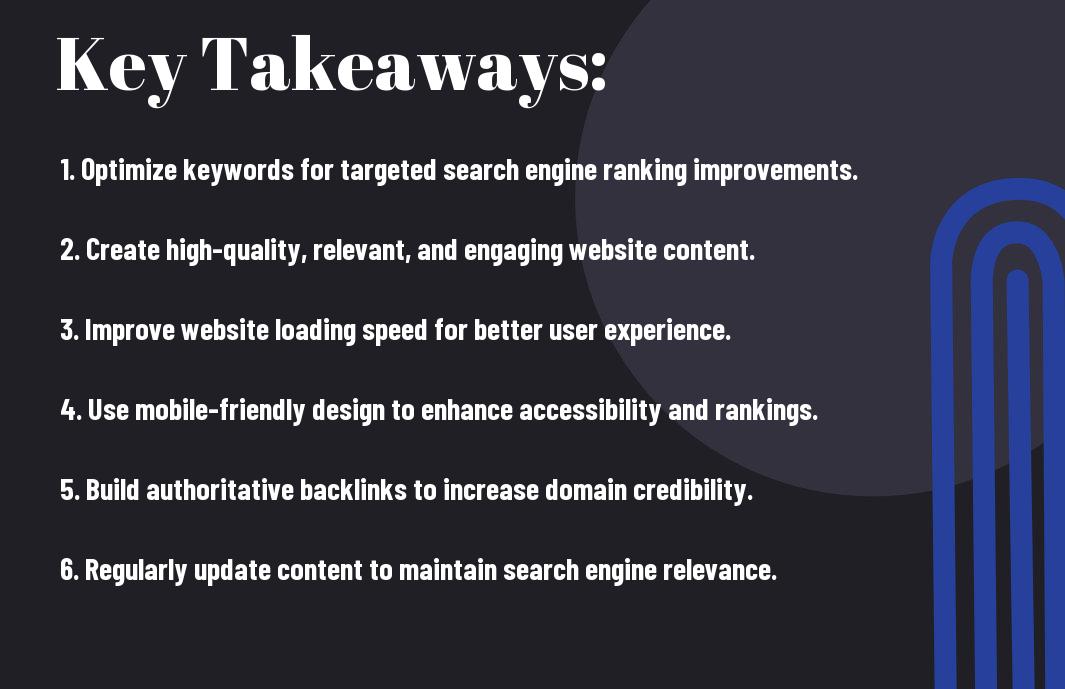
So, as you explore the vital techniques outlined in ‘SEO Simplified – Essential Techniques To Boost Your Website’s Visibility’, you arm yourself with the knowledge needed to enhance your website’s presence on search engines. Each strategy, from optimizing your content with relevant keywords to ensuring a seamless user experience, plays a defining role in how your audience finds and engages with your site. By implementing these methods thoughtfully, you not only increase your visibility but also create a more rewarding experience for your visitors.
As you launch on your SEO journey, keep in mind that visibility is an ongoing process. Regularly updating your strategies and staying informed about the latest trends in the digital landscape will further empower you to maintain and improve your search rankings. SEO isn’t just about attracting traffic; it’s about fostering meaningful connections with your audience. With dedication and the right techniques, you can significantly boost your website’s performance and reach your goals.