
Many small businesses underestimate how visual storytelling and smart graphic design multiply your local SEO impact and attract customers in Brampton; you can strengthen brand recognition, improve click-through rates, and make your listings more discoverable by combining compelling visuals with targeted keywords, optimized images, and consistent branding across platforms so your website traffic and local visibility grow measurably.
The Importance of Visual Storytelling
Visuals drive memory and action: HubSpot finds content with relevant images receives up to 94% more views, and eye-tracking shows users fixate on images before headlines. You can leverage this by pairing a clear visual hierarchy with your value proposition-hero photos that show product use, short explainer clips, or infographic highlights-to increase engagement and guide visitors toward conversions on landing pages and local listings.
Understanding Your Audience
Segment your audience by age, platform and intent to choose visuals that convert: Gen Z favors short vertical videos on TikTok/Instagram Reels, while 35+ audiences often respond better to polished photos and straightforward explainer graphics on Facebook and Google Business Profiles. You should run quick A/B tests-swap hero images or thumbnails for one week each-to measure click-through changes typically in the 10-25% range for strong visual shifts.
Choosing the Right Visuals
Select formats that match intent: high-quality product photos for e-commerce, candid lifestyle shots for social trust, illustrations or icons to simplify complex services, and short captioned videos for tutorials. Use JPEG for photographs, PNG for graphics with transparency, and WebP where supported to cut file size. Also follow platform specs-1080×1080 for Instagram posts, 1200×628 for Facebook link images-to avoid cropping and preserve impact.
Dive deeper into composition and performance: apply the rule of thirds, prioritize contrast for accessibility, and include descriptive alt text to boost SEO. Keep image files under ~200 KB when possible to maintain page speed-Google data shows each additional second of load time can reduce conversions by about 7%. Finally, test thumbnails, background choices and on-product vs. lifestyle shots; local businesses often see 15-30% uplifts by switching to images that show actual customers using the product or service.
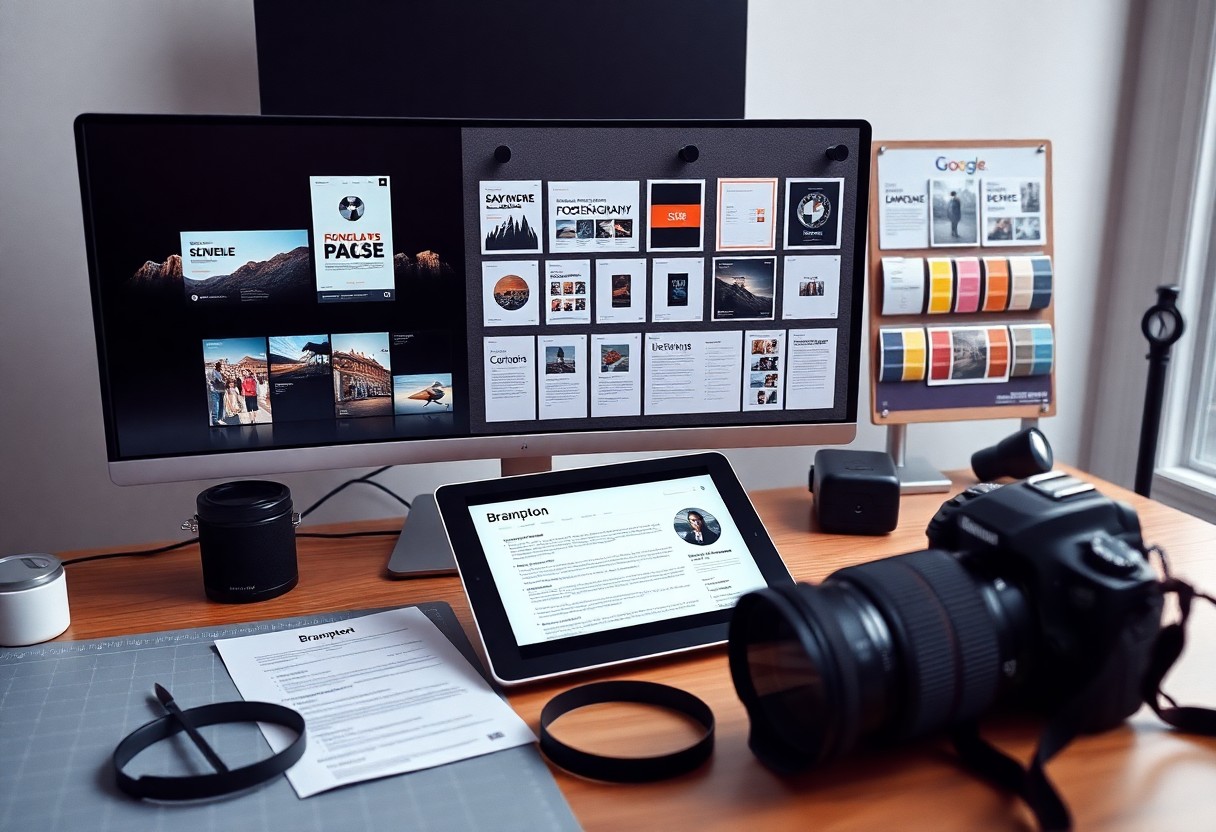
Effective Graphic Design Tips
Balance clarity and creativity to guide attention: use hierarchy, high-contrast CTAs (A/B tests often show 10-20% lifts), and fast-loading imagery – Google reports many users abandon pages that take over 3 seconds. You should place key info in the top-left F-pattern for content pages, use SVG logos for scalability, and compress images under 200 KB to improve load times.
- Use a 12-column grid to align elements and speed up layout decisions.
- Limit typefaces to two and keep body sizes between 16-18px for web readability.
- Serve WebP or optimized JPEGs and lazy-load below-the-fold images to boost performance.
- Validate CTA contrast with WCAG 2.1 (4.5:1 for normal text) and iterate via A/B tests for better conversions.
- Any design change should be tracked with CTR, bounce rate, and conversion metrics to prove impact.
Crafting a Strong Brand Identity
Define a compact visual system: choose one primary logo lockup, two typefaces, and three brand colors (primary, secondary, accent) so your presence stays consistent across channels. You should export assets as SVG for web and provide hex/RGB values for designers and developers. Draft a one-page style guide showing logo usage, spacing, and example applications (social, print, web) so freelancers can implement your brand without guesswork.
Utilizing Color Psychology
Use color to communicate intent quickly: red drives urgency for sales, blue builds trust for finance or tech, and green signals sustainability or health. You must ensure palettes meet WCAG 2.1 contrast (4.5:1 for normal text, 3:1 for large text) and test with tools like WebAIM. Small hue or saturation changes can shift behavior, so A/B test accent colors on CTAs before rolling them out sitewide.
Apply the 60-30-10 rule-60% background, 30% supporting elements, 10% accent CTAs-and pick accessible accents (try a high-contrast orange like #FF6A00 or a dependable blue like #0052CC) then validate with WebAIM or Stark. You should run short A/B tests; many marketers report 10-20% CTR swings from simple hue or contrast changes, and recording those results in your brand guide keeps future choices data-driven.
Enhancing Local SEO in Brampton
To improve visibility in Brampton, focus on hyperlocal signals that search engines value: a complete Google Business Profile with 5-10 high-quality photos, consistent NAP (name, address, phone) across directories, and localized content targeting neighborhoods like Downtown Brampton or Bramalea. BrightLocal reports 98% of consumers read local reviews, so you should solicit and respond to ratings and track discovery queries in Search Console to prioritize map-driven traffic.
Fundamentals of Local SEO
Optimize your Google Business Profile with primary categories, accurate hours, services, and verified ownership, and maintain NAP consistency across the top 10 directories (Yelp, YellowPages, etc.). Apply local schema markup on contact and service pages, and target keyword variations such as “plumber Brampton” and “emergency plumber near Queen Street” in meta tags and H1s to capture neighborhood intent.
Strategies to Boost Web Traffic
Publish neighborhood guides, event pages, and service-area landing pages to capture long-tail and “near me” queries; improve mobile speed (aim under 3 seconds) and secure local backlinks from Brampton organizations. Use Google Business posts and photos-Google data shows listings with photos get ~42% more direction requests and ~35% more website clicks-to convert local discovery into visits.
Implement LocalBusiness schema with precise geo-coordinates and serviceArea, create monthly blog posts answering specific local queries (e.g., “best Brampton patios”), and promote them via community channels like Facebook groups and Nextdoor. Run radius-targeted search ads with UTM parameters to track which neighborhoods convert, aim for CTRs comparable to search averages (roughly 3-5%), and optimize landing-page conversions based on analytics.
Integrating Visuals with SEO
You should treat visuals as indexed assets: use descriptive filenames and alt text, add ImageObject schema, and include images in your XML sitemap so search engines can surface them. Keep individual images under ~200 KB to protect Largest Contentful Paint (LCP) targets of 2.5s. For instance, switching to WebP and proper compression often reduces file sizes by 25-35%, improving load time and image impressions without sacrificing clarity.
Optimizing Images for Search Engines
You must implement responsive images (srcset with widths like 320, 640, 1024), lazy-loading, and concise alt text that describes function and includes a keyword naturally. Compress to 50-80% quality depending on format, prefer WebP or modern AVIF when supported, and use clear filenames (brampton-bakery-sourdough.jpg). Captions and structured captions increase contextual relevance and clicks from image search.
Leveraging Infographics for Engagement
You should design infographics to be scannable and linkable: 3-7 clear data points, a branded header, cited sources, and an explicit CTA. Offer an embed code to encourage backlinks and create 2-3 social-ready tiles (1080×1080, 1200×628) to increase shares. Properly hosted infographics on your domain tend to earn more referral traffic and backlinks than third-party uploads.
When building an infographic, set the canvas to 800-1200 px width for blog display and export an OG image at 1200×630. Include a 150-300 word caption that explains methodology and keywords, provide a downloadable PDF, and supply an iframe/embed snippet with attribution to make outreach easy. Track referral traffic and backlinks via Google Search Console and your CMS to measure impact and iterate on topics that generate the most links.
Measuring Success in Visual Storytelling
Set clear KPIs that connect visuals to business outcomes: track pageviews, time on page, CTRs, micro-conversions and local actions like Google My Business clicks or direction requests (Google reports listings with photos get ~42% more direction requests and ~35% more website clicks). Use baseline data before redesigns and aim for measurable lifts – A/B tests commonly produce 10-20% increases in engagement – so quantify ROI by linking visual changes to traffic, leads and revenue over 4-8 week windows.
Analyzing Traffic and Engagement Metrics
Focus on sessions, bounce rate, average session duration, scroll depth, and conversion rate, and compare source/medium to spot which channels respond to visuals. Use Google Analytics and Search Console for traffic patterns, and heatmaps or session recordings (Hotjar, Microsoft Clarity) to see where users drop off. For example, if mobile bounce falls 15% after a hero image swap, that signals improved relevancy; track whether that translates into a conversion lift over the next month.
Adjusting Strategies Based on Insights
Prioritize changes that move high-value metrics: if CTR improves but conversions lag, test headline copy, CTA color/placement, and form length; if local traffic is low, optimize image alt text and filenames with location keywords like “Brampton.” Run A/B tests long enough to reach statistical significance (or at least 1,000 sessions per variant when possible) and iterate in 2-4 week cycles to capture reliable trends across devices and channels.
Use a rapid testing cadence: create a hypothesis (e.g., swapping a product shot for a lifestyle image will raise CTR by 10%), design one variable per test, and measure primary and secondary KPIs for 2-4 weeks. Apply frameworks like ICE (Impact, Confidence, Ease) to prioritize experiments, roll out winners site-wide, and document results in a playbook. Also track local signals – update GMB photos and metadata, then monitor calls and direction requests to verify real-world impact.
Future Trends in Visual Storytelling and SEO
As you adapt, AI-generated visuals, AR overlays, and voice-search optimization will reshape how customers discover and interact with your brand. Implement structured data and improve Core Web Vitals-page speed and mobile UX-since mobile accounts for over half of web traffic. Expect personalized thumbnails and dynamic content to raise click-through rates; A/B testing will reveal which visual hooks drive local conversions in Brampton.
Evolving Design Practices
You should adopt responsive logos, variable fonts, AVIF images and SVG animations to cut load times while maintaining impact; AVIF often reduces file sizes versus JPEG. Prioritize WCAG 2.1 AA contrast and descriptive alt text to widen reach and accessibility. Use data-driven thumbnails-Netflix-style artwork personalization shows tailored visuals boost engagement-and run split tests to quantify lifts in CTR and dwell time.
The Role of Social Media
You can leverage short-form video, shoppable posts, and user-generated content to amplify local discovery and referral traffic. Native vertical clips under 60 seconds perform best on platforms like TikTok and Reels, while micro-influencers (5K-50K followers) often deliver 2-8% engagement and targeted reach. Then funnel social audiences to schema-enhanced landing pages to convert impressions into visits and calls.
Optimize every profile for local SEO: keep NAP consistent, add location tags, hours, and a link to a schema-marked contact page. Solicit and respond to reviews within 24-48 hours to strengthen trust signals. Use UTM parameters and track direction requests, calls, and form submissions so you can tie specific social posts to measurable increases in website traffic and in-store visits.
Summing up
Hence you can combine compelling visuals and targeted local SEO to strengthen brand recognition, engage customers, and increase web traffic in Brampton. Apply clear visual storytelling, consistent branding, optimized local keywords, reviews, and location pages to convert visitors into clients. With measured design choices and localized SEO tactics, you boost visibility, trust, and measurable business growth.